
Published
8 minute read

Sagging skin rarely arrives as one dramatic change. More often, the face slowly loses the support that once kept the cheeks defined, the lower face balanced, and the skin looking smooth. Changes in facial volume, collagen, elastin, and underlying structure can all contribute. Fillers can help restore selected areas and refine natural contours without surgery.
But the product is only part of the equation. Where filler is placed, how much is used, and whether it belongs there at all depend heavily on the injector. For patients who want to look refreshed rather than noticeably “filled,” choosing someone who values restraint is essential.
Keep reading to learn what separates thoughtful injectable treatment from simply adding volume.
Fillers are injectable treatments used to restore volume, soften certain lines, and enhance facial contours. Hyaluronic acid dermal fillers are among the most widely used options. Hyaluronic acid is a sugar molecule naturally present in the body.
When formulated as an injectable gel, it can be placed beneath the skin to add support and shape where facial volume has diminished. Aging affects much more than the surface of the skin. Bone, collagen, elastin, facial fat, and tissue hydration change over time.
Those changes can contribute to hollow areas, folds, reduced cheek definition, thinning lips, and shifts in facial proportions. Results can often be seen immediately, although swelling may temporarily affect the initial appearance.
Hyaluronic acid filler typically continues settling and integrating with the tissue during the following weeks. Depending on the product and treatment area, results may last roughly eight months to two years.
That does not mean every area showing signs of aging should receive filler. Skin laxity, pigmentation, texture, and other concerns may respond better to different treatments. A skilled injector recognizes those distinctions. That judgment is a major part of achieving natural-looking filler in Garden City.

Beautiful filler work is less about adding volume everywhere and more about knowing where small changes will have the greatest impact.
The following qualities can help patients identify an injector whose approach centers on proportion, safety, and subtle enhancement.
A qualified injector should look beyond the feature you point to. Suppose you arrive concerned about deepening folds around your mouth. Filling those folds directly may seem like the obvious solution. Yet the change could partly reflect volume loss elsewhere in the face.
An experienced injector considers how your cheeks, chin, lips, jawline, and surrounding tissues relate to one another. They also evaluate your facial structure from different angles. This whole-face perspective matters because facial features do not exist independently.
Adding volume to one area can change how neighboring features appear. A small amount of chin enhancement, for example, may improve lower-face proportion. Strategic cheek support may create a different visual effect than simply filling a nearby crease.
The objective is not to use filler wherever aging is visible. It is to determine which changes will create the most harmonious result.
Injectables may be minimally invasive, but they are still medical treatments. The face contains a complex network of muscles, blood vessels, nerves, fat compartments, and structural tissues. Their location and depth vary across different facial regions.
That makes anatomical knowledge fundamental. A qualified injector needs to understand not only where filler can be placed but where it should be placed. Product choice, injection depth, technique, and volume all matter.
Strong anatomical knowledge also helps an injector evaluate individual differences. Two patients may request the same cheek enhancement yet require completely different approaches because their underlying facial structures are different.
A natural filler injector in Long Island should therefore treat anatomy as the starting point rather than following the same injection pattern for everyone.
Restraint may be one of the most important skills in aesthetic medicine. It is easy to assume that more filler will create more improvement. Facial aesthetics rarely work that way. Too much volume can distort proportions and make features appear heavy. It can also move a patient’s appearance farther away from the subtle result they originally wanted.
Subtle dermal filler takes another approach. An injector may begin conservatively and allow the initial treatment to settle before recommending more. This creates an opportunity to evaluate how the face responds.
Incremental treatment can be especially valuable for first-time patients. It allows enhancement to evolve without committing immediately to a dramatic change. The goal should be enough—not as much as possible.
One of the clearest signs of an experienced aesthetic provider is the ability to say, “Filler isn’t the best solution for this.” Not every age-related concern comes from volume loss. Loose or sagging skin may involve declining collagen and elasticity. Fine surface lines may relate more to skin quality. Pigmentation, sun damage, redness, and rough texture require entirely different approaches.
Adding filler to a problem caused primarily by laxity can sometimes create unwanted heaviness without addressing the actual concern. A thoughtful injector separates problems involving:
Treatment can then be selected according to what is actually happening. Patients benefit when recommendations are based on anatomy and tissue quality rather than on finding another place to inject.
Natural-looking injectable treatment should not erase the features that make your face recognizable. Perhaps you have always had delicate lips. Maybe your cheek structure is naturally soft rather than sharply sculpted. Those characteristics are part of your appearance.
A good injector listens to what you want to preserve. The consultation should include questions about what bothers you, what you like about your face, and how noticeable you want the change to be.
Some patients want a visible enhancement. Others want colleagues and friends to notice that they look refreshed without being able to identify why. Neither preference is inherently better. What matters is that treatment reflects the individual rather than an aesthetic trend.
A milliliter of filler is not an aesthetic plan. Facial proportions determine whether added volume looks cohesive. This is why an injector should assess relationships between features before recommending treatment.
Consider the lower face. Lip volume can look very different depending on chin projection and jaw structure. Treating the lips without considering those relationships may create a result that feels disconnected from the rest of the face. The same principle applies to cheeks. Dramatically projecting the cheekbones may look beautiful on one facial structure and unnatural on another.
Natural results come from asking what the face needs, not what happens to be popular. This proportional thinking is especially important when patients want multiple areas treated. Every adjustment should support the overall composition.
“Filler” is a broad category, not a single standardized treatment. Different injectable gels can have different properties. Some applications require structural support. Others call for softer integration or more delicate refinement. Treatment depth also varies according to the area and objective.
This is another reason patients should be cautious about approaching injectable treatment as though they are simply purchasing a certain number of syringes. The important questions are broader: What are we trying to improve? Why is this particular treatment appropriate? Where will the product be placed? How does that choice support the overall result?
A skilled provider should be able to explain the reasoning behind the plan in understandable language.
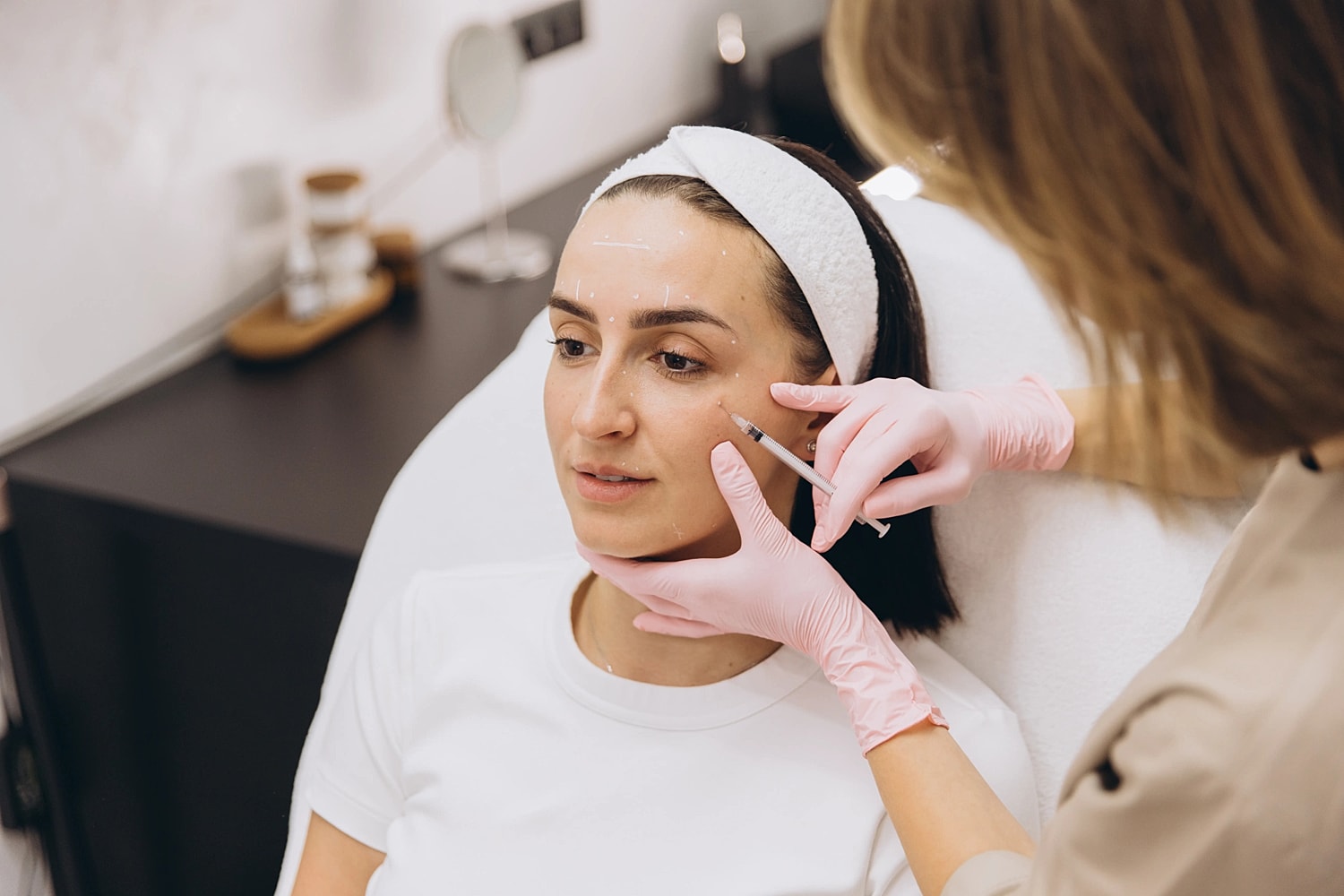
Fillers can create meaningful improvement, but they have boundaries. They cannot stop aging. They cannot correct every type of sagging skin. They also should not be expected to reproduce the effect of surgery when significant tissue repositioning is needed.
A good consultation includes those limitations. Patients should understand what filler can realistically change, what it cannot change, and whether another treatment might complement or replace it. The results timeline also deserves discussion.
Hyaluronic acid filler can provide immediate visible improvement. However, the first look is not necessarily the final result. Temporary swelling may be present, and the filler can continue settling during the following weeks. An injector who prepares patients for that process makes it easier to evaluate the outcome patiently rather than making premature decisions about additional treatment.
The most successful injectable result may be the one nobody can immediately identify. Fillers can restore selected areas of lost volume, soften certain lines, and refine facial contours. Yet natural-looking treatment depends on far more than the injectable itself. Anatomy, proportion, product selection, restraint, and clinical judgment all shape the final outcome.
At Applied Aesthetic in Garden City, NY, injectable treatment can be approached as part of a thoughtful facial rejuvenation plan rather than a race to add volume. Under the leadership of Natalie Sharp, FNP-BC, patients benefit from more than a decade of dermatology expertise combined with an artistic perspective on minimally invasive aesthetic treatments.
Get in touch with us today to book your appointment!