
Radiant skin isn’t accidental. It’s intentional. It’s the result of smart habits, strategic treatments, and knowing when topical products simply aren’t enough. Serums and creams promise glow, firmness, and clarity—and sometimes they deliver subtle improvement.
But when texture changes, volume shifts, and fine lines deepen, surface-level care may no longer be enough.
That’s where cosmetic dermatology enters the conversation. Through advanced non-surgical aesthetics, aesthetic dermatology goes beyond the bathroom mirror and into the architecture of the skin itself.
If you’ve ever wondered whether upgrading from medical-grade skincare to cosmetic skin treatments is worth it, continue reading. The difference is deeper than you think.
Glow Is a Commitment
Healthy skin is more than a trend. It’s a long-term investment. Consistency matters. So does strategy.
- Barrier Protection. Your skin barrier shields against pollution, UV rays, and dehydration. When compromised, inflammation and dullness follow.
- Collagen Preservation. Collagen declines with age, impacting firmness and elasticity. Supporting it early helps slow visible aging.
- Pigment Control. Uneven tone and sunspots develop gradually. Addressing them early maintains clarity.
- Texture Refinement. Dead skin buildup and environmental stress affect smoothness and makeup application.
- Preventative Maintenance. Fine lines don’t appear overnight. Prevention plays a powerful role in facial rejuvenation.
- Confidence Boost. Radiant skin influences how patients present themselves—socially and professionally.
Maintaining healthy, luminous skin requires more than guesswork. Cosmetic dermatology provides a structured, clinical pathway for skin rejuvenation that goes beyond topical care.
What Is Cosmetic Dermatology?
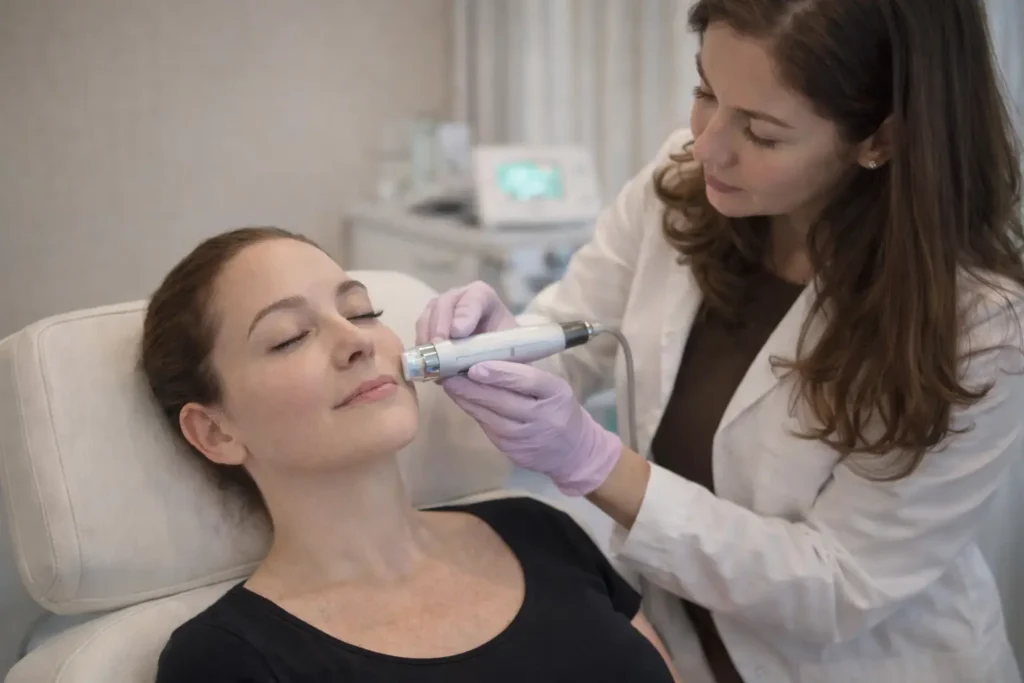
Cosmetic dermatology is the medical specialty focused on improving the appearance, texture, and overall health of the skin through advanced treatments. Unlike traditional dermatology, which centers on medical skin conditions, aesthetic dermatology prioritizes refinement, balance, and visible rejuvenation.
Cosmetic skin treatments may include:
- Cosmetic injectables such as neuromodulators and dermal fillers
- Biostimulators that promote collagen production
- Advanced facial rejuvenation procedures
- Other non-surgical aesthetics designed to restore smoothness and contour
These anti-aging treatments address structural and muscular contributors to aging, not just surface concerns. Rather than relying solely on creams, cosmetic dermatology works beneath the skin to create lasting improvement.
Surface vs Structure
Both medical-grade skincare and cosmetic dermatology serve a purpose. One refines what’s visible on the surface. The other reshapes what’s happening beneath it. The difference isn’t about good versus better. It’s about depth, control, and long-term impact.
When patients understand how each approach works, decision-making becomes strategic rather than experimental.
1. Level of Penetration
Medical-grade skincare operates primarily within the epidermis and upper dermis. Even with higher concentrations of retinoids or peptides, these products depend on absorption through the skin barrier.
They improve cell turnover, hydration, and mild pigmentation, but their reach is biologically limited. Cosmetic dermatology bypasses that barrier entirely. Through aesthetic dermatology techniques such as cosmetic injectables and biostimulators, treatments are delivered precisely where aging begins—within the muscle, deep dermis, or subdermal layers.
Structural support is restored, collagen production is stimulated, and movement patterns are modified. Skincare smooths the canvas. Cosmetic dermatology rebuilds the foundation.
2. Strength and Concentration
Medical-grade skincare contains clinically active ingredients that outperform over-the-counter formulas. Prescription-strength retinoids accelerate cell renewal. Antioxidants combat oxidative stress. Exfoliating acids refine texture.
Yet even the most potent serum cannot compete with the mechanical and biological impact of cosmetic skin treatments. In aesthetic dermatology, strength lies in controlled delivery — depth, dosage, and anatomical placement.
A dermal filler does not rely on absorption. A neuromodulator does not depend on topical penetration. Anti-aging treatments administered through non-surgical aesthetics operate at a structural level. This isn’t about percentages on a label. It’s about targeted intervention.
3. Speed of Results
Medical-grade skincare rewards patience. Visible changes unfold gradually over months of consistent use. Tone brightens. Texture refines. Fine lines may soften. Cosmetic dermatology changes the timeline entirely.
Neuromodulators begin softening dynamic wrinkles within days. Dermal fillers provide immediate contour restoration. Biostimulators initiate collagen remodeling that continues for months.
Patients seeking noticeable facial rejuvenation often turn to cosmetic dermatology because it compresses time. What skincare achieves slowly, aesthetic dermatology can initiate strategically and efficiently.
4. Customization Level
Medical-grade skincare offers limited personalization. Products are selected based on skin type and concerns, but the application remains uniform—applied topically across broad areas.
Cosmetic dermatology is hyper-individualized. Every injection point, dosage, and depth is mapped to a patient’s anatomy. Muscle strength, bone structure, collagen density, and facial proportions are evaluated before treatment begins.
This level of customization transforms cosmetic skin treatments into precision medicine. Facial rejuvenation becomes tailored artistry rather than generalized care.
5. Addressing Volume Loss
Volume loss is one of the most defining aspects of aging. Cheeks flatten. Under-eyes hollow. Jawlines soften. No topical product can replace lost volume. Creams hydrate; they do not sculpt.
Cosmetic dermatology addresses volume directly through dermal fillers and biostimulators. By restoring structural support beneath the skin, contour is redefined. Light reflects differently. Facial shadows soften.
This is where the divide becomes unmistakable. Medical-grade skincare improves surface clarity. Aesthetic dermatology rebuilds youthful architecture.
6. Muscle Relaxation
Dynamic wrinkles, such as frown lines and crow’s feet, are created by repetitive muscle contraction. Skincare cannot interrupt that mechanical movement. Cosmetic dermatology can.
Neuromodulators relax targeted muscles responsible for expression lines. By reducing repetitive contraction, they prevent lines from becoming permanently etched. This distinction is fundamental. Anti-aging treatments within aesthetic dermatology alter the muscle activity that forms wrinkles. Skincare treats what the muscle leaves behind.
7. Long-Term Prevention
Medical-grade skincare plays an essential preventative role. Daily sunscreen reduces UV-induced collagen breakdown. Retinoids support cellular renewal. Antioxidants combat environmental damage.
Cosmetic dermatology enhances prevention by intervening earlier and deeper. Preventative neuromodulators limit repetitive folding of the skin. Biostimulators promote collagen production before significant loss occurs.
Prevention becomes layered. Instead of waiting for visible decline, non-surgical aesthetics proactively slow its progression.
8. Precision and Expertise
Skincare is self-directed. Patients select, apply, and adjust products independently. Cosmetic dermatology requires advanced clinical training. Injection technique, anatomical awareness, and safety protocols determine both outcome and longevity. The provider’s expertise directly influences aesthetic harmony.
This elevates aesthetic dermatology beyond product selection. It becomes medical artistry grounded in anatomy. The difference is not just what is used. It is who delivers it.
9. Scope of Transformation
Medical-grade skincare improves tone, mild texture irregularities, and superficial pigmentation. It refines. Cosmetic dermatology expands the scope dramatically. Wrinkles, sagging, contour imbalance, collagen depletion, and volume shifts can be addressed simultaneously through coordinated cosmetic skin treatments.
Facial rejuvenation within aesthetic dermatology often impacts multiple layers at once—muscle, fat, and dermis, creating comprehensive change rather than isolated improvement. The scale of transformation is broader, more dimensional, and longer lasting.
10. Integration Strategy
The smartest approach blends both modalities. Medical-grade skincare maintains skin health and extends the longevity of cosmetic skin treatments. Sunscreen protects collagen stimulated by biostimulators. Retinoids support texture improvements following non-surgical aesthetics.
However, when significant correction is desired, cosmetic dermatology leads. It provides the structural shift that skincare cannot replicate. Integration is powerful, but transformation begins with aesthetic dermatology.

Elevate Your Skin Strategy
Confidence comes from clarity, knowing you’re investing in treatments that align with your goals.
At Applied Aesthetic in Garden City, NY, board-certified Nurse Practitioner Natalie Sharp specializes in advanced cosmetic dermatology and non-surgical aesthetics. Each treatment plan is personalized, focused on natural-looking results and precision artistry.
For patients seeking meaningful facial rejuvenation beyond skincare alone, expert aesthetic dermatology offers the next level of refinement. Radiant skin deserves more than surface solutions. Cosmetic dermatology makes that radiance sustainable.
Call now to book your appointment!