
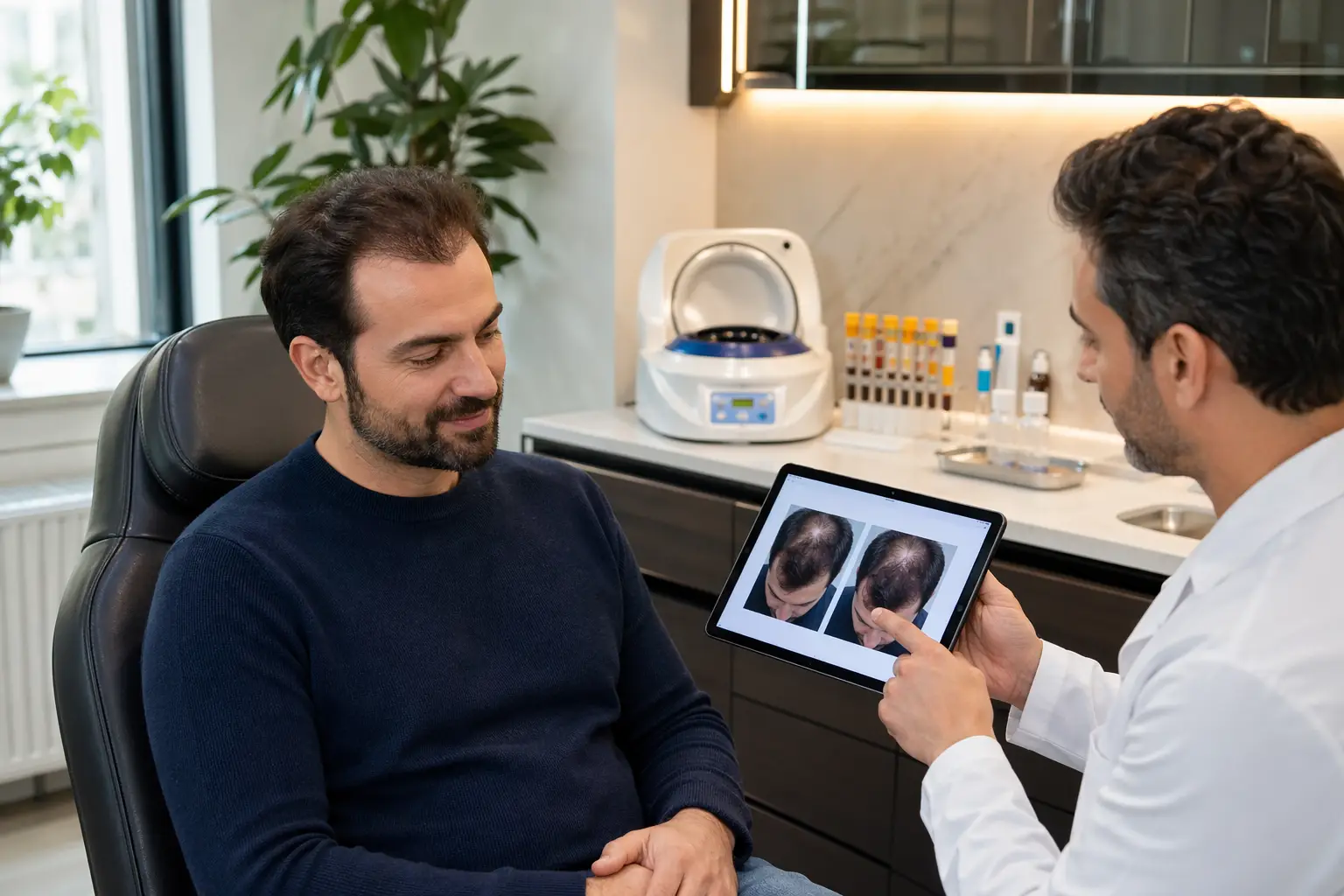
Hair loss has a way of shifting how you see yourself. It’s not just about what’s visible in the mirror—it’s about how your confidence feels throughout the day. Maybe it starts with subtle thinning at the crown or more hair left behind in the brush. Over time, those small signs begin to add up.
For many patients, the challenge isn’t just hair loss itself—it’s finding a solution that feels natural, safe, and aligned with their lifestyle. Surgical options can feel like a big leap, while over-the-counter products often deliver inconsistent results.
That’s where modern hair restoration with PRF and PRP steps in. These regenerative treatments take a different approach by working with your body—not against it—to stimulate hair growth from within. If you’re looking for a smarter, more intuitive way to address thinning hair, this is a conversation worth having.
Keep reading to understand how these treatments are reshaping the future of hair restoration.
What Is Hair Restoration with PRF and PRP?
Hair restoration today is no longer limited to transplants or temporary fixes. Regenerative therapies like PRP (Platelet-Rich Plasma) and PRF (Platelet-Rich Fibrin) offer a non-surgical way to support natural hair growth by using your body’s own healing properties.
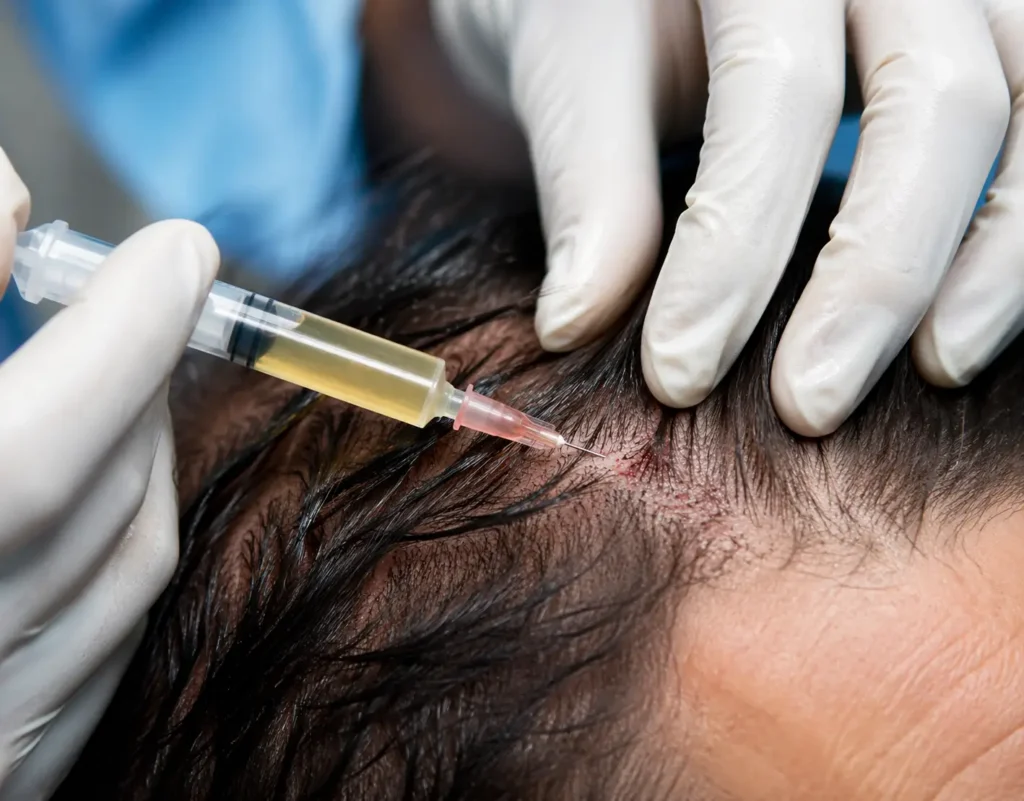
Both treatments begin with a simple blood draw. That sample is then processed to concentrate platelets—cells rich in growth factors that play a key role in tissue repair and regeneration. These concentrated platelets are injected into targeted areas of the scalp to stimulate dormant follicles and improve overall scalp health.
While PRP and PRF share a similar foundation, there are subtle differences in how they are prepared and how they function.
Key Features of PRP and PRF Hair Restoration
- Derived from your own blood, making it a natural hair regrowth therapy
- Non-surgical and minimally invasive
- Designed to stimulate dormant hair follicles
- Improves scalp circulation and nutrient delivery
- Supports thicker, stronger hair over time
- Suitable for early to moderate thinning hair treatment
PRP (Platelet-Rich Plasma)
- Processed using a centrifuge to isolate platelets
- Delivers a concentrated dose of growth factors
- Often used in multiple sessions for progressive improvement
PRF (Platelet-Rich Fibrin)
- Processed more slowly without anticoagulants
- Contains a higher concentration of platelets, white blood cells, and fibrin
- Releases growth factors gradually over time for extended stimulation
Both approaches fall under advanced hair loss treatment options offered at a professional hair restoration clinic, providing patients with a natural path forward.
Why PRF and PRP Are Natural Solutions
Hair thinning is rarely caused by a single factor. Genetics, stress, hormonal changes, and lifestyle all play a role. What makes PRF and PRP stand out is their ability to address these concerns without introducing synthetic substances into the body.
Instead, they amplify what your body already does best—heal, repair, and regenerate.
The Science of Regrowth
To appreciate how these treatments work, it helps to understand what’s happening beneath the surface. Hair follicles rely on a steady supply of nutrients, oxygen, and growth signals to remain active.
When these signals weaken, follicles can shrink or become dormant. PRF and PRP reintroduce those signals, encouraging follicles to re-enter the growth phase.
How PRF and PRP Support Hair Thinning
Hair thinning is rarely caused by a single issue—it’s often the result of multiple internal and external factors working together over time.
PRF and PRP address this complexity by supporting the scalp at a deeper, cellular level, helping restore the conditions needed for healthier, more consistent hair growth.
1. Stimulating Dormant Follicles
One of the most powerful aspects of PRF and PRP is their ability to wake up inactive hair follicles. The growth factors released during treatment signal the follicles to resume activity.
This is particularly beneficial for patients in the early stages of hair thinning, where follicles are still viable but underperforming. Over time, this stimulation can lead to noticeable improvements in density and coverage.
2. Enhancing Blood Flow to the Scalp
Healthy hair growth depends on strong circulation. When blood flow to the scalp is reduced, follicles receive fewer nutrients and less oxygen.
PRF and PRP help improve microcirculation in the treated areas. This increased blood flow supports a healthier scalp environment, allowing hair to grow stronger and more consistently.
3. Supporting Collagen Production
Collagen is not just important for skin—it also plays a role in the structure of the scalp. A healthy collagen network helps support hair follicles and maintain scalp integrity.
The regenerative properties of PRF and PRP encourage collagen production, contributing to a more supportive foundation for hair growth.
4. Delivering Growth Factors Over Time
One of the key differences between PRF and PRP lies in how growth factors are released.
PRP delivers a concentrated burst of growth factors shortly after injection, creating an immediate stimulus. PRF, on the other hand, releases these factors more gradually due to its fibrin matrix.
This extended release allows for a longer period of stimulation, which may contribute to more sustained results over time.
5. Reducing Inflammation
Inflammation in the scalp can disrupt the hair growth cycle and contribute to thinning. By introducing healing components from your own blood, PRF and PRP help calm this environment.
This creates a more balanced setting for hair follicles to function properly, supporting long-term hair regrowth therapy.
6. Strengthening Existing Hair
Hair restoration is not only about regrowing hair—it’s also about improving the quality of the hair you already have.
Patients often notice that their existing hair becomes thicker, stronger, and more resilient after treatment. This contributes to an overall fuller appearance, even before significant regrowth occurs.
7. Supporting Natural Hair Cycles
Hair grows in cycles, and disruptions to this cycle can lead to increased shedding. PRF and PRP help support a more balanced cycle by reinforcing the growth phase.
This can reduce excessive shedding and encourage more consistent regrowth over time.
PRF vs PRP: Choosing the Right Option
While both treatments offer similar benefits, the choice between PRF and PRP often depends on individual goals and preferences.
PRP may be ideal for patients seeking a well-established approach with a strong track record. PRF, with its extended release of growth factors, may appeal to those looking for a more gradual and sustained effect.
A personalized consultation helps determine which option aligns best with your needs.
A Modern Take on Hair Restoration
The shift toward regenerative treatments reflects a broader trend in aesthetic medicine—one that prioritizes natural results and long-term health.
PRF and PRP align with this philosophy by working with the body’s own biology. They offer a way to address hair loss without the need for surgery or synthetic interventions.
For patients, this means a more comfortable and intuitive experience.

Elevating Your Hair Health Strategy
Hair restoration is no longer about chasing quick fixes. It’s about building a strategy that supports your hair over time.
By combining treatments like PRF and PRP with healthy habits and professional guidance, patients can create a more resilient foundation for growth.
This layered approach allows for results that feel both noticeable and natural.
A Fresh Perspective on Confidence
Hair thinning can feel like a loss of control, but modern solutions are changing that narrative. PRF and PRP offer a way to take a more active role in your hair health—one that feels grounded, thoughtful, and empowering.
Led by board-certified Nurse Practitioner, Natalie Sharp, Applied Aesthetic in Garden City, NY, hair restoration is approached with the best intentions. Treatments are designed to align with each patient’s goals, creating results that feel authentic rather than overdone.
Hair restoration is not about chasing perfection. It’s about restoring balance, supporting growth, and helping you feel like yourself again—confident, refined, and naturally revitalized.
Contact us today to book your appointment!