

Salmon DNA (polynucleotide or PDRN) treatments have become one of the most talked-about regenerative beauty trends following the holiday season. Also known as polynucleotide or PDRN treatments, these therapies are designed to support cellular regeneration, stimulate collagen production, and improve overall skin rejuvenation. While injectable salmon DNA is not FDA-approved for cosmetic use in the United States, polynucleotide-based formulations are gaining attention for their role in regenerative medicine and post-procedure skin support.
As more patients seek subtle, preventive anti-ageing treatments rather than dramatic change, regenerative approaches such as polynucleotides align with the growing focus on long-term skin health. Instead of adding volume or freezing movement, these treatments aim to enhance skin quality from within, making them especially appealing as part of a New Year skin reset.
Why January Is “Skin Reset” Season
After weeks of holiday travel, indulgent meals, disrupted sleep, and increased stress, skin often reflects the internal strain. Elevated cortisol levels can increase inflammation, while excess sugar contributes to glycation, a process that weakens collagen and accelerates visible aging. Alcohol dehydrates the skin, and cold winter air further compromises the skin barrier, leaving it dull, dry, and more reactive.
January naturally becomes a moment of recalibration. Just as many people reset their fitness or nutrition habits, skin rejuvenation treatments are rising in popularity as part of a broader wellness mindset. Rather than seeking aggressive correction, many patients are now drawn to regenerative medicine approaches that focus on cellular repair, collagen stimulation, and long-term resilience.
This shift toward preventative anti-aging treatments reflects a growing understanding that healthy skin begins at the structural level. Supporting cellular regeneration, especially after environmental and lifestyle stressors, can help restore hydration, elasticity, and overall skin vitality without dramatically altering facial features.
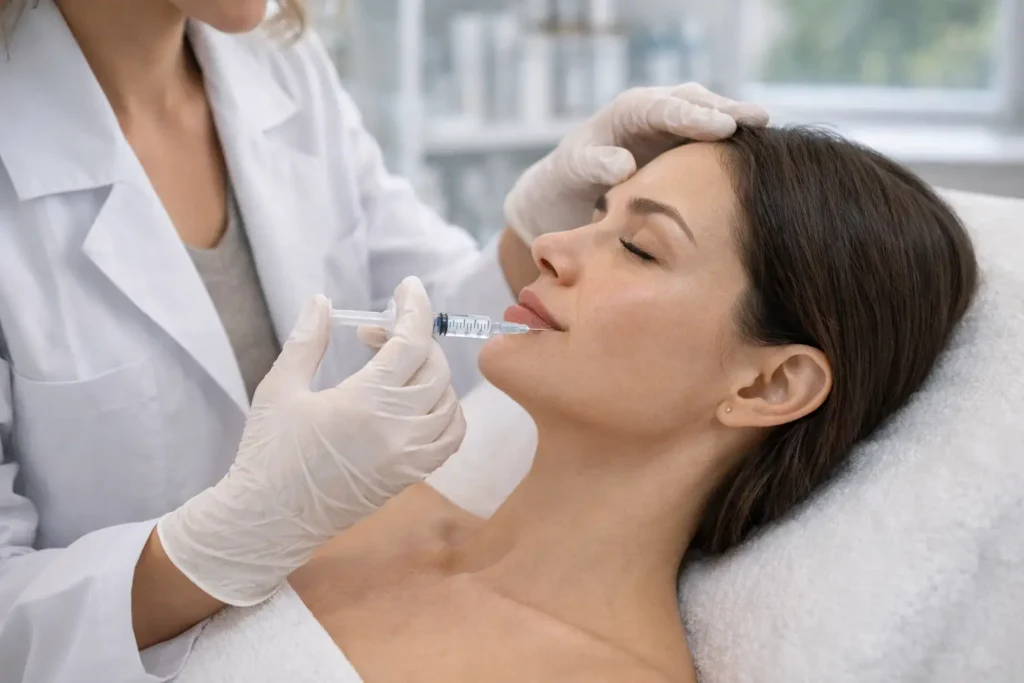
What Are Salmon DNA (Polynucleotide) Treatments?
Core Definition
Salmon DNA treatments are therapies derived from purified DNA fragments, often labeled PDRN (polydeoxyribonucleotide). These fragments are sourced from highly purified salmon DNA and have been studied within regenerative medicine for their role in supporting tissue repair and cellular function.
Polynucleotides are not fillers and do not function like neuromodulators. Instead, they are categorized as regenerative aesthetic treatments due to their potential to enhance the skin’s natural repair processes. Internationally, they are often used as injectable skin boosters; however, in the United States, injectable salmon DNA for cosmetic purposes is not currently FDA-approved.
Mechanism of Action
Polynucleotides are believed to interact with cellular pathways involved in repair and the regulation of inflammation. Research suggests that PDRN may activate adenosine A2A receptors, receptors associated with anti-inflammatory signaling and tissue regeneration. This activation may support fibroblast activity, which is critical to collagen and elastin production.
Collagen is essential for firmness and elasticity, while elastin contributes to the skin’s ability to bounce back. By supporting these structural proteins, polynucleotide-based therapies are associated with improvements in texture, hydration, and resilience over time.
Some studies also indicate that polynucleotides may support angiogenesis, the formation of new blood vessels, which is important in tissue healing. Improved microcirculation can contribute to healthier, more radiant-looking skin, particularly after environmental or procedural stress.
The Salvage Pathway: Supporting Cellular Repair
An additional mechanism often discussed in scientific literature is the “salvage pathway.” When tissue is stressed or damaged, cells can recycle nucleotides to rebuild DNA and restore normal function. Polynucleotide fragments may provide building blocks that support this natural recycling process.
In practical terms, this means regenerative treatments are designed to help the skin repair itself rather than simply masking concerns. This distinction is important for understanding why salmon DNA–based therapies are classified as regenerative medicine rather than traditional aesthetic injections.
Important U.S. Regulatory Clarification
While polynucleotide injections are widely offered in parts of Asia and Europe, injectable salmon DNA treatments are not currently FDA-approved for cosmetic use in the United States. This distinction is important for patients researching trending wellness procedures. As a result, Applied Aesthetic does not offer salmon DNA injections and instead uses polynucleotide formulations topically within carefully designed treatment protocols.
In U.S.-based medical aesthetic practices, polynucleotide-based formulations are typically used topically as adjunctive therapies, particularly following treatments such as laser resurfacing, photofacials, or microneedling. When applied in a controlled medical setting after these procedures, the skin’s temporary microchannels or increased permeability may allow for enhanced absorption.
Understanding this regulatory landscape helps patients make informed decisions and separates scientifically grounded regenerative support from viral trend marketing.
How Polynucleotide Formulations Are Used in the U.S.
Post-Laser Application
In the United States, polynucleotide-based formulations are most commonly used as topical adjuncts following energy-based treatments such as HALO®, MOXI®, and BroadBand Light (BBL) photofacials. These procedures create controlled micro-injury within the skin, stimulating collagen remodeling and renewal. Immediately afterwards, the skin is more receptive to targeted supportive ingredients.
At Applied Aesthetic, Rejuran® Healing Essence is applied topically immediately after HALO®, MOXI®, BBL®, and Morpheus8 treatments to support the skin’s natural renewal process. These procedures create an ideal environment for enhanced absorption. When applied post-treatment, Rejuran® Healing Essence helps support the skin barrier, calm visible dryness, improve hydration, and optimize the look and feel of the skin as it heals.
When applied post-procedure, polynucleotide formulations are intended to support barrier recovery, calm visible dryness, and enhance hydration during the healing phase. Rather than acting as a stand-alone aesthetic injection, they function as a regenerative complement, optimizing the skin’s natural repair response after laser resurfacing or light-based treatments.
With SkinPen® Microneedling
Polynucleotide formulations may also be used topically in combination with SkinPen® microneedling. Microneedling creates temporary microchannels in the skin, allowing deeper penetration of serums applied immediately afterwards.
At Applied Aesthetic, Rejuran® Skin Booster and Rejuran® Tone-Up Booster are applied topically at the conclusion of SkinPen® microneedling treatments. These advanced regenerative formulas contain 1% hydrolyzed DNA (c-PDRN®) derived from Korean wild salmon and are designed to support natural cellular regeneration, improve hydration, and enhance overall skin quality.
Rejuran® Skin Booster combines c-PDRN®, hyaluronic acid, and essential amino acids (glycine, lysine, leucine, and proline) to help support collagen production, strengthen the skin barrier, and improve the appearance of fine lines, redness, and pores.
Rejuran® Tone-Up Booster includes c-PDRN®, hyaluronic acid, panthenol, vitamin C (ascorbic acid), glutathione, and tranexamic acid to help brighten uneven skin tone, support collagen production, hydrate and soothe the skin, and improve overall radiance.
This approach aligns with the philosophy of regenerative aesthetics, supporting collagen stimulation and tissue resilience without adding artificial volume or altering facial structure.
Clinical Goals
When incorporated appropriately, polynucleotide-based topical therapies are intended to:
- Support post-procedure healing
- Enhance hydration and elasticity
- Improve overall skin texture
- Strengthen the skin barrier
- Promote gradual, natural-looking rejuvenation
Rather than creating dramatic change, these treatments focus on improving skin quality over time, an approach increasingly favored by patients seeking subtle enhancement and preventative anti-ageing strategies.
What Salmon DNA Treatments Are NOT
As interest grows, so do misconceptions. Clarifying what these treatments are not helps patients better understand where they fit within aesthetic medicine.
- They are not dermal fillers and do not restore lost facial volume.
- They are not Botox® and do not relax muscles or treat dynamic wrinkles.
- They are not an instant lifting treatment.
- They are not fish oil; they are purified DNA fragments processed for medical use.
- They are not a replacement for professional microneedling or laser treatments when used topically.
Instead, polynucleotide-based therapies fall under regenerative medicine, focused on improving the health and resilience of the skin itself.
Benefits of Polynucleotide-Based Skin Support
Within regenerative aesthetic treatments, polynucleotides are associated with several skin-quality benefits. These include:
- Improved hydration and moisture retention
- Enhanced elasticity and firmness
- Smoother skin texture
- Reduced appearance of fine lines
- Support for calmer, more resilient skin
- Assistance with post-treatment recovery
Because these benefits are tied to gradual collagen support and cellular repair, results are typically progressive rather than immediate. The emphasis is on long-term skin rejuvenation rather than rapid transformation.
Salmon DNA vs Other Regenerative Treatments
Understanding how polynucleotides compare with other anti-aging treatments clarifies their role in aesthetic care.
Salmon DNA vs Botox
Botox is a neuromodulator that temporarily relaxes muscles, softening dynamic wrinkles such as frown lines and crow’s feet. Polynucleotide-based treatments, by contrast, aim to support tissue repair and collagen stimulation. One affects muscle activity; the other focuses on skin quality.
Polynucleotides vs Dermal Fillers
Dermal fillers restore volume and contour to areas such as the cheeks, lips, or jawline. Polynucleotides do not create structural change or add fullness. Instead, they may improve texture and elasticity by supporting regenerative processes.
Polynucleotides vs PRP / PRF
PRP (platelet-rich plasma) and PRF (platelet-rich fibrin) use components from a patient’s own blood to stimulate healing and collagen production. Polynucleotides utilize purified DNA fragments. Both are regenerative approaches, but they differ in their sources and mechanisms.
Polynucleotides vs Biostimulators
Biostimulators such as Sculptra® and Radiesse® are injectable treatments that stimulate deeper structural collagen remodeling over time. In the U.S., topically applied polynucleotide-based therapies primarily focus on enhancing surface-level regeneration and supporting healing after other procedures.
Who May Consider Regenerative Skin Support?
Polynucleotide-based therapies may appeal to individuals who:
- Are in their 30s seeking preventative anti-aging strategies
- Notice early texture changes or dullness
- Want to improve post-laser recovery
- Are you addressing mild acne scarring
- Experience dry, compromised winter skin
- Prefer subtle enhancement over dramatic change
This regenerative approach aligns with a growing desire for natural refinement, helping skin appear healthier and more resilient without looking altered.
Safety, Sessions & Expectations
When used topically following in-office procedures, polynucleotide-based formulations are generally well tolerated. Temporary redness may occur after microneedling or laser treatments, which is expected as part of the normal healing process.
Results are gradual and often cumulative. Many regenerative protocols recommend a series of treatments spaced several weeks apart, followed by maintenance sessions depending on individual skin goals.
Because these therapies focus on cellular support rather than immediate volumizing effects, expectations should centre around progressive improvements in skin quality rather than dramatic overnight change.

A New Year Reset Rooted in Regeneration
The growing interest in salmon DNA reflects a broader shift in aesthetics, away from dramatic alteration and toward regenerative skin health. After the holidays, when skin often shows signs of stress and dehydration, supporting cellular repair can feel like a meaningful reset.
Rather than chasing quick fixes, many patients are choosing preventative strategies that strengthen the skin over time. Regenerative approaches focus on long-term collagen support, barrier resilience, and natural refinement, helping you look like yourself, only refreshed.
As aesthetic medicine continues to evolve, the future appears less about transformation and more about thoughtful, science-informed rejuvenation.
Frequently Asked Questions
What are salmon DNA treatments used for?
They are used to support collagen production, improve hydration, and enhance overall skin texture and resilience within regenerative aesthetic care.
Are salmon DNA injections FDA-approved?
Injectable salmon DNA treatments are not currently FDA-approved for cosmetic use in the United States. At Applied Aesthetic, salmon DNA (Rejuran® polynucleotides) is used topically only, never injected.
Is salmon DNA the same as Botox?
No. Botox relaxes muscles to reduce dynamic wrinkles. Polynucleotides are formulated to support tissue repair and improve skin quality.
How long do results last?
Improvements in skin quality may last several months, depending on the treatment plan and individual skin health. Maintenance sessions are often recommended.
Is salmon DNA safe?
When used in controlled medical settings and appropriately formulated, polynucleotide-based therapies are generally well tolerated.
How does PDRN stimulate collagen?
Research suggests that PDRN may activate pathways associated with fibroblast activity and tissue repair, supporting collagen production over time.
Can salmon DNA replace fillers?
No. Fillers restore volume, while polynucleotides focus on improving skin texture and resilience.
Is topical PDRN effective?
Topical application following procedures such as microneedling or laser treatments may enhance absorption and support the skin’s healing response.